
CAD Modelling
Industrial Tank 3D Design and Modeling in SolidWorks
3D design and modeling play a crucial role in industrial product development. They ensure precision, efficiency, and manufacturability in various applications. This project focuses on the design and modeling of an industrial storage tank using SolidWorks, a leading CAD software. The process includes 3D modeling, dimensional specifications, technical drawings, and rendering to create a production-ready design that meets engineering standards.
Design and Modeling Process
Requirement Analysis and Concept Development
To begin, the design process starts with a detailed analysis of technical and functional requirements. These include:
- Storage capacity for industrial use
- Material compatibility based on application needs
- Inlet and outlet connections for efficient fluid transfer
- Structural integrity to withstand operational stresses
- Manufacturability for cost-effective production
By adhering to industry standards, the design ensures optimal performance and compliance with regulations.
3D Modeling in SolidWorks
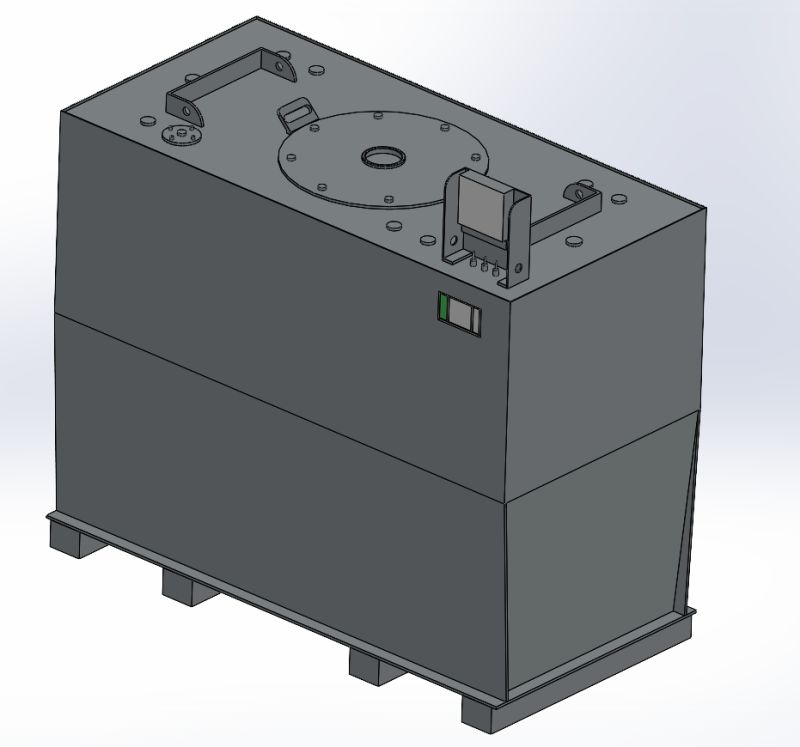
The next phase involves detailed 3D modeling, which includes:
- Creating the base geometry with precise sketching tools
- Designing the tank structure using sheet metal modeling techniques
- Incorporating mounting supports for stability
- Adding inlets, outlets, and covers for functional integration
These elements work together to enhance durability and functionality.
Structural Integrity and Engineering Features
To strengthen the tank’s design, several engineering optimizations were applied:
- Reinforcement details and material thickness to improve longevity
- Strategic placement of weld joints and fasteners for manufacturability
- Finite Element Analysis (FEA) simulations to test load-bearing capacity and stress distribution
These structural analyses help in identifying potential weaknesses and improving reliability before production.
Technical Drawings and Documentation
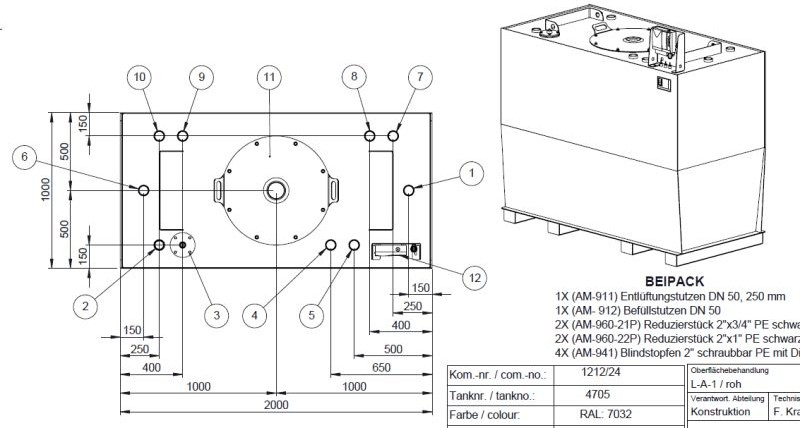
After modeling, the next step is generating detailed technical documentation, which includes:
- 2D engineering drawings with precise dimensions
- A Bill of Materials (BOM) specifying required components
- Assembly instructions for seamless manufacturing and quality assurance
This documentation reduces production errors and enhances efficiency.
Rendering and Visualization
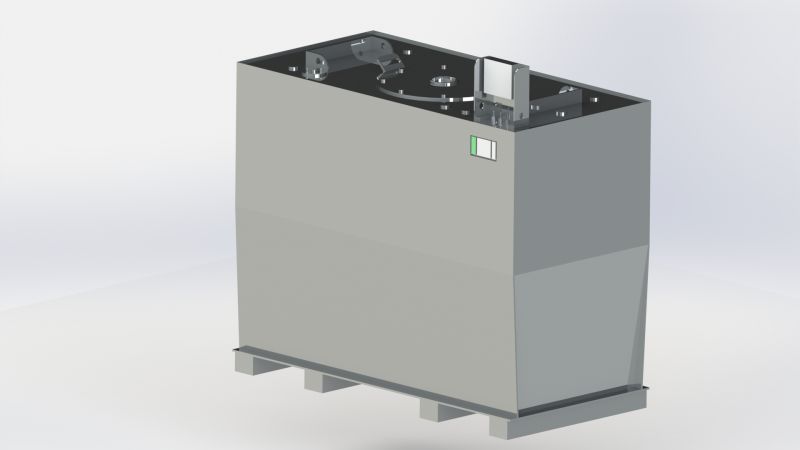
To provide a realistic representation of the final product, high-quality renders and exploded views were created using SolidWorks Visualize. These images highlight:
- Material textures and finishes
- Structural details and component placements
- Different perspectives for better visualization
This step is essential for presentation, marketing, and validation before manufacturing.
Final Outcome and Applications
The final 3D CAD model is an accurate, production-ready, and functionally optimized design. It is suitable for various industrial applications, including:
- Fluid storage solutions
- Chemical processing units
- Mechanical systems requiring durability
By providing detailed technical documentation, this design ensures a smooth transition from the modeling phase to manufacturing. Additionally, it minimizes errors and optimizes resource usage.
Conclusion
Industrial 3D design and modeling in SolidWorks help streamline production processes, reduce prototyping costs, and ensure design feasibility before manufacturing. By integrating precise engineering calculations and advanced modeling techniques, this project showcases expertise in mechanical design, product development, and industrial engineering.