
Temperature Reduction in Existing District Heating

Optimization Strategies for District Heating Systems with Thermal Energy Storage

Authors: Martina Capone, Elisa Guelpa, Vittorio Verda
Read the full article here: Optimization Strategies for District Heating Systems

Introduction

District Heating (DH) systems are a key component in the transition toward sustainable energy solutions. This study by Martina Capone, Elisa Guelpa, and Vittorio Verda explores innovative optimization strategies to improve the efficiency of Thermal Energy Storage (TES) in DH networks. The research focuses on reducing energy losses, integrating renewable sources, and enhancing economic feasibility through advanced control mechanisms.
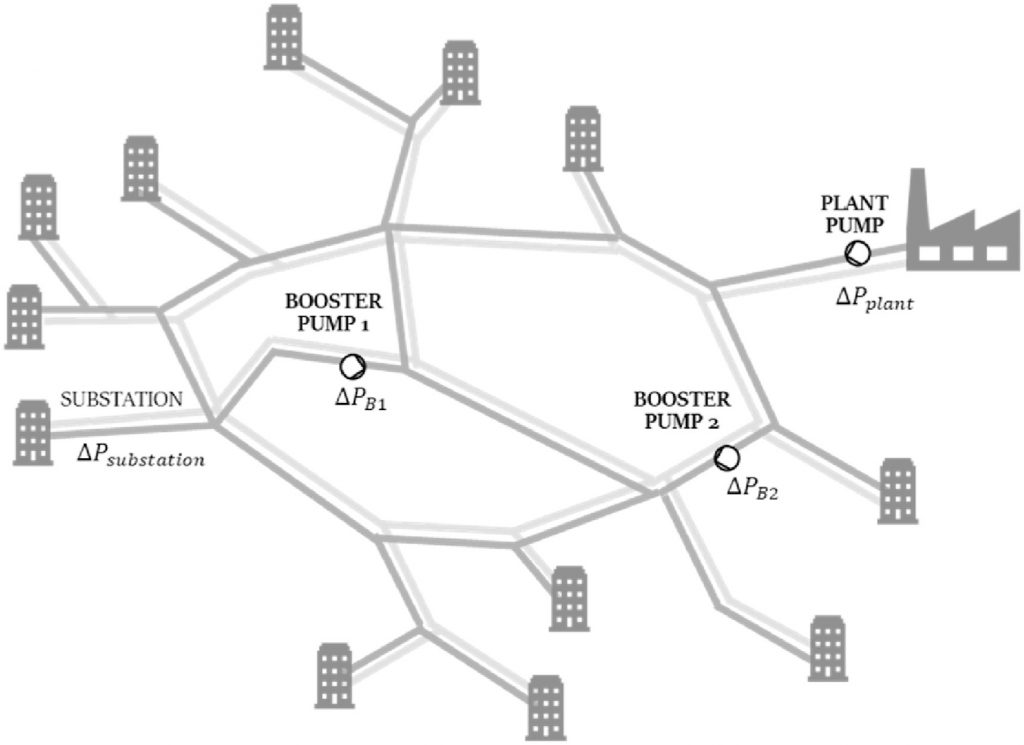
Key Challenges in District Heating Optimization

The optimization of DH systems, particularly with TES integration, faces several obstacles:

  • Fluctuating Demand Patterns – Energy consumption varies daily and seasonally, requiring dynamic energy distribution strategies.
  • Storage Utilization Efficiency – Maximizing TES efficiency ensures effective energy savings and system reliability.
  • Renewable Energy Integration – Solar, geothermal, and waste heat sources require optimized thermal management solutions.
  • Cost-Effective Operation – Optimizing system performance must balance economic feasibility with sustainability goals.
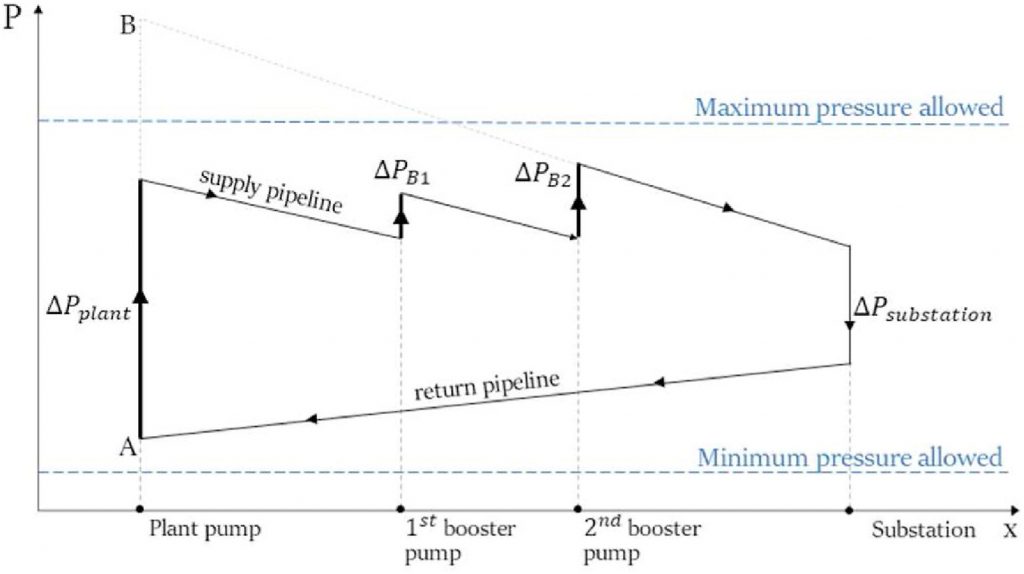
Research Methodology

The study introduces an advanced framework for optimizing DH operations, which includes:

  1. Smart Thermal Storage Management
    • Efficient scheduling of TES charging and discharging.
    • Enhancing the flexibility of storage integration to balance peak demands.
  2. Demand-Supply Synchronization
    • Implementing real-time adaptive control mechanisms.
    • Utilizing predictive models to anticipate demand fluctuations.
  3. Energy Loss Reduction
    • Optimizing low-temperature DH networks for higher efficiency.
    • Minimizing heat dissipation in the distribution pipelines.

Key Findings and Results

By applying the proposed optimization framework to real-world DH networks, the study demonstrates:

  • Enhanced Energy Efficiency – TES integration reduces heat loss and increases system resilience.
  • Operational Cost Reduction – Smarter energy scheduling lowers peak demand expenses.
  • Lower Environmental Impact – Greater renewable energy penetration significantly reduces CO₂ emissions.

Future Directions

  • AI-Driven Energy Management – Leveraging machine learning for predictive optimization.
  • Next-Generation TES Solutions – Exploring new thermal storage technologies such as phase-change materials (PCMs).
  • Scalability for Smart Cities – Expanding optimized DH networks to support urban sustainability initiatives.

Access the full study here: Optimization Strategies for District Heating Systems

Similar Posts

  • Heat Pumps in Large District Heating Networks

    Optimal Installation of Heat Pumps in Large District Heating Networks Martina Capone, Elisa Guelpa, Vittorio VerdaEnergy Department, Politecnico di Torino, Corso Duca Degli Abruzzi 24, 10129 Torino, ItalyPublished in: Energies, 2023, 16(3), 1448. DOI: 10.3390/en16031448 Introduction Power-to-heat technology plays a crucial role in decarbonizing energy systems. The integration of large-scale heat pumps (LHPs) within district…

  • |

    PINN for Laminar Flow Solving

    Predicting Laminar Flow Velocity Profile Using Physics-Informed Neural Networks (PINNs) Introduction A Physics-Informed Neural Network (PINN) is a powerful tool for predicting laminar flow velocity profiles within channels, essential for designing efficient thermal and fluid systems. While traditional CFD methods require complex meshing and high computational resources, PINNs integrate physical laws directly into neural networks,…

  • District Cooling Network Optimization

    Two-Stage Stochastic Programming for District Cooling Network Optimization Under Uncertainty Authors: Manfredi Neri, Elisa Guelpa, Vittorio VerdaSource: ScienceDirect – Applied Thermal Engineering Introduction The optimization of district cooling networks is crucial due to the high capital costs associated with their installation and operation. Traditional deterministic models often fail to account for uncertainties in cooling demand…

  • |

    Compression Chiller

    Optimizing Refrigeration Cycle Performance – EES code Introduction In modern HVAC and refrigeration systems, maximizing efficiency and optimizing performance are critical for reducing energy consumption and operational costs. This analysis focuses on a thermodynamic evaluation of a refrigeration cycle using R410A, considering key components such as the evaporator, condenser, expansion valve, and compressor. The objective…

  • |

    Optimizing Air Mixing Box

    Optimizing Air Mixing Box Design with Python and SolidWorks Simulation Introduction Air mixing boxes play a crucial role in ensuring efficient airflow management in various engineering applications. They help in blending multiple air streams at different temperatures to achieve uniform thermal distribution. In modern engineering, numerical simulations and computer-aided design (CAD) tools have become essential…

  • Solar Hot Water

    Solar Hot Water Control System – A Smart Solution for Efficient Water Heating A solar hot water control system is an essential component of solar water heating systems, ensuring optimal temperature regulation and energy efficiency. It manages water flow, controls heating processes, and enhances the overall performance of the system. This article explores the working…

Leave a Reply

Your email address will not be published. Required fields are marked *