
Turbocor Compressor
Turbocor Compressor: A Revolution in HVAC Efficiency
By Erfan Haghighat Damavandi – Politecnico di Torino
Introduction
Efficient and reliable air conditioning systems are crucial for modern buildings. Turbocore compressors represent a breakthrough in HVAC technology, offering high energy efficiency, low maintenance, and quiet operation. This article explores the working principle, advantages, and applications of Turbocore compressors.
How Turbocore Compressors Work
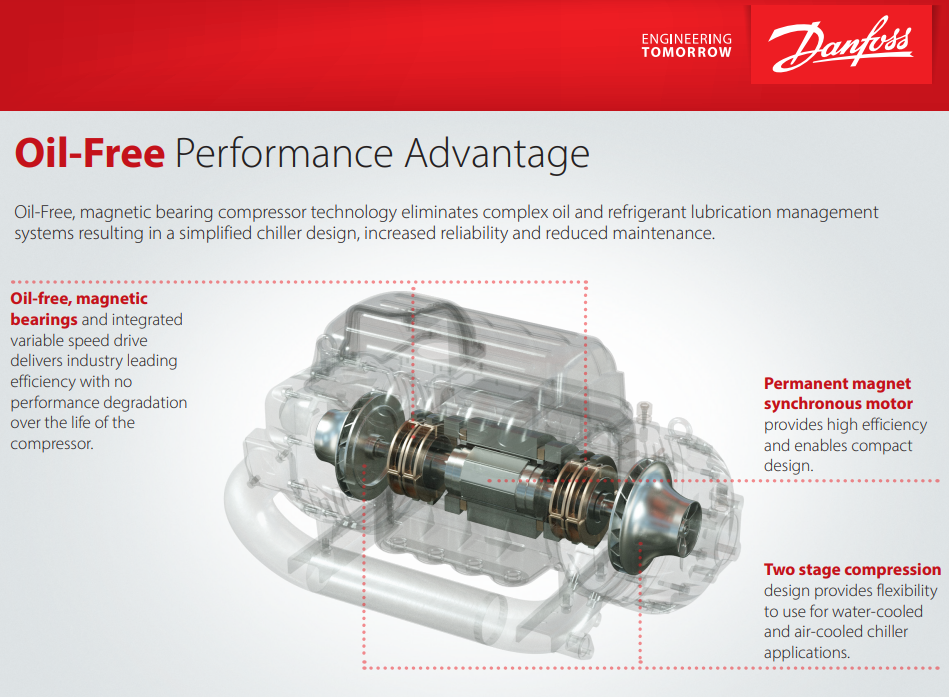
Turbocore compressors are centrifugal compressors that utilize magnetic bearings and variable speed drives for frictionless operation. Unlike conventional systems that rely on oil-lubricated bearings, these compressors use magnetic levitation, eliminating mechanical contact.
Key Features of the Working Principle:
- High-Speed Impeller: Rotates on a magnetic bearing system, reducing friction and wear.
- Refrigerant Vapor Compression Cycle: Includes compression, condensation, expansion, and evaporation, improving energy efficiency.
- Variable Speed Motor: Adjusts speed based on cooling demand, reducing energy consumption.
This oil-free design enhances efficiency, longevity, and performance, making it an ideal choice for modern HVAC systems.
Advantages of Turbocore Compressors
1. High Energy Efficiency
- Operates at optimal speeds, reducing power consumption.
- Supports variable cooling loads, adapting to real-time demand.
- Lowers electricity bills and carbon footprint.
2. Reliability & Low Maintenance
- No oil lubrication required, reducing maintenance costs.
- Magnetic bearings eliminate mechanical wear and increase lifespan.
- Self-monitoring diagnostics ensure continuous performance.
3. Environmentally Friendly
- Uses low-GWP refrigerants, reducing environmental impact.
- Supports green building standards like LEED certification.
- Quiet operation, making it suitable for hospitals, hotels, and offices.
Applications of Turbocore Compressors
Turbocore compressors are widely used in commercial, industrial, and residential air conditioning systems.
1. Commercial Buildings
- Shopping malls, hospitals, and office buildings benefit from their high efficiency and quiet performance.
2. Industrial Applications
- Used in data centers, food processing plants, and manufacturing facilities requiring precise cooling.
3. Residential HVAC Systems
- Provides energy savings and quiet operation, making it an attractive choice for homeowners.
Maintenance & Serviceability
Turbocore compressors are designed for easy maintenance:
- Modular Design: Simplifies repairs and component replacements.
- Self-Diagnostic Features: Monitors performance and detects potential issues.
- No Oil Management: Eliminates risks of oil contamination in refrigerant.
Despite higher upfront costs, long-term savings make them a cost-effective choice for HVAC systems.
Challenges & Limitations
While Turbocore compressors offer many benefits, they also have some challenges:
1. Sensitivity to Ambient Temperature
- Operate best within specific temperature ranges.
- Extreme temperatures may require backup cooling systems.
2. Limited Cooling Capacity
- Currently designed for small to medium cooling loads.
- Not always suitable for large-scale HVAC applications.
Future Developments
Ongoing research aims to enhance Turbocore compressors:
- Increasing Cooling Capacity: Developing larger models for industrial applications.
- Improving Temperature Adaptability: Enhancing performance in extreme climates.
- Sustainable Refrigerants: Exploring eco-friendly alternatives with lower GWP.
Integration with Smart HVAC Systems
Turbocore compressors can integrate with Building Automation Systems (BAS) to improve efficiency:
- Real-Time Monitoring: Adjusts speed based on cooling demand.
- Energy Optimization: Reduces unnecessary energy usage.
- Remote Diagnostics: Ensures preventive maintenance and faster repairs.
Noise Reduction & Installation Benefits
Turbocore compressors offer low noise levels, making them ideal for quiet environments:
- Magnetic bearings eliminate vibrations.
- Smooth impeller operation reduces noise.
Additionally, their compact design simplifies installation:
- Easily retrofitted into existing HVAC systems.
- No heavy foundations needed, reducing costs.
Global Market Trends
The demand for energy-efficient HVAC solutions is rising globally. Turbocore compressors are gaining popularity, particularly in:
- Asia-Pacific: China, Japan, and India are leading adopters.
- North America & Europe: Driven by sustainability initiatives and green building regulations.
Conclusion
Turbocore compressors are redefining HVAC efficiency by offering:
- High energy efficiency & low maintenance costs.
- Environmentally friendly refrigerants.
- Smart automation integration.
Despite some limitations, advancements in technology and sustainability make them a leading choice for future HVAC systems. As green energy standards evolve, Turbocore compressors will play an increasingly vital role in modern buildings.